Making search smarter: inside Vinted's Search Relevance team
Ever searched for something on Vinted and wondered how we decide what to show you first?
That's something Beatrice Musizza spends a lot of time thinking about. She's a Data Scientist in our Search Relevance team in Berlin, working on ways to make search smarter and help members find what they're actually looking for.
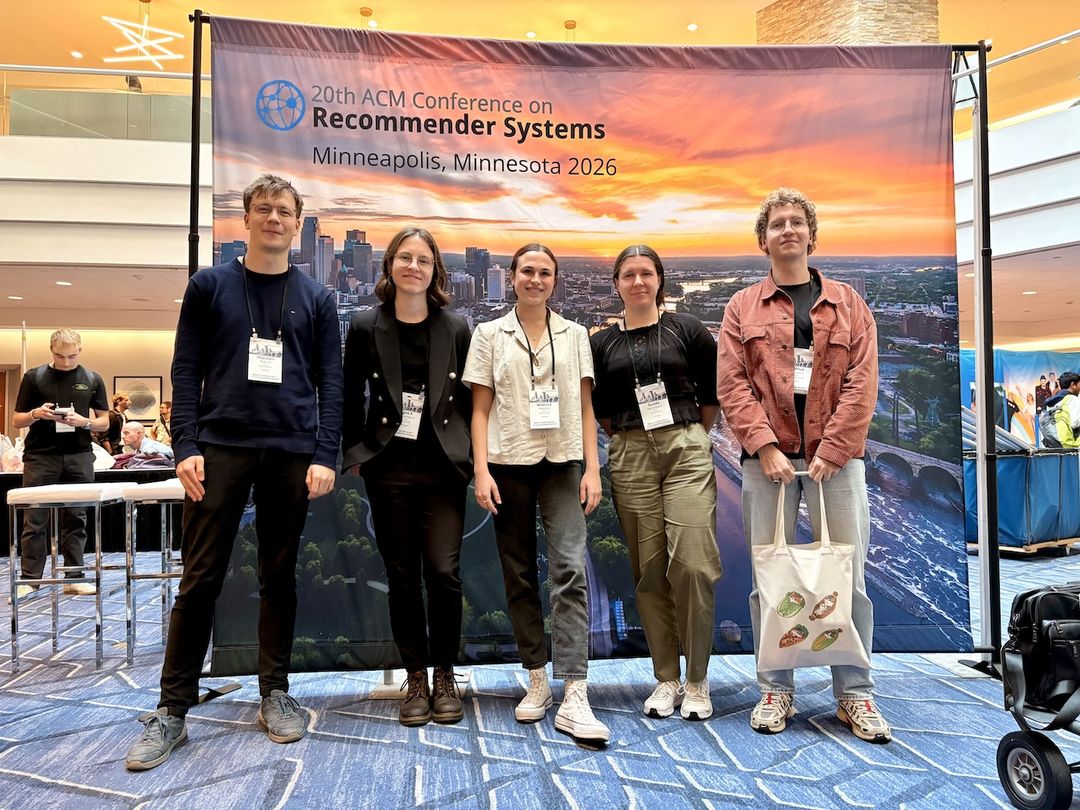
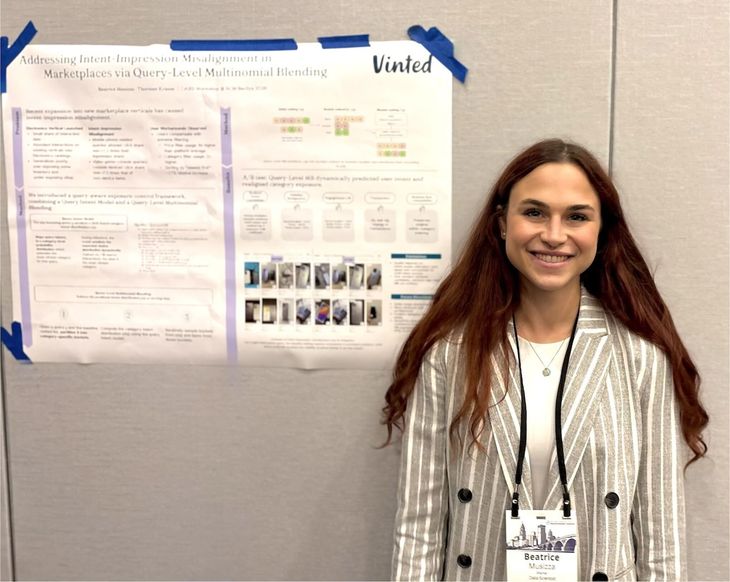
Beatrice recently co-authored and presented some of her team's research at an international conference on recommender systems in Minneapolis. It all started with a familiar problem: searching for one thing and getting results for something else. Keep reading to find out what they discovered.
New categories bring new challenges
For years, Vinted was best known for second-hand fashion. And because search algorithms learn from how members interact with listings – what they click on, favourite and buy – a lot of the data behind Vinted's search results came from clothing purchases.
But as Vinted expanded into new categories, that brought new challenges. With less historical data to learn from, search ranking models relied on patterns from more established categories. And those patterns didn't always reflect what members were actually looking for.
Take Electronics, for example. Accessories are cheaper, there are more of them than the devices themselves, and they can match a search for a particular phone model. This means a simple search for "iPhone 13" could show more accessories than actual phones at the top of the results.
Beatrice and her team call this 'intent–impression misalignment': when the items members see in their search results don't match what they actually want, based on what they click on and buy. And it’s exactly the kind of problem they set out to solve.
Understanding the problem through data
Before making any changes, Beatrice and her team needed to get a full picture of the problem – and the opportunity. So they compared what members were seeing in their search results with what they were actually clicking on.
The numbers told an interesting story:
- Phones: Actual phones received 2.2 times as much click share as impression share. In other words, members were clicking on phones more often than they were being shown.
- Consoles: The pattern was similar, with consoles receiving more than 1.5 times the click share of the accessories appearing alongside them.
- Price filters: In searches where members looked like they were searching for more expensive items, price filters were used nearly six times more often than the platform average. This means members were manually filtering out cheaper accessories to find the devices they wanted.
The takeaway? The items members wanted were already available on Vinted. They just weren't visible enough in the search results.
The items members wanted did exist; they were simply under-exposed.Beatrice Musizza, Data Scientist
Why retraining the search model wasn't enough
With the problem identified, the next step was finding a solution. But the obvious fixes weren't doing the job.
One option was traditional 'diversity' re-ranking, which spreads search results across different types of items. The trouble was, Vinted's results were already diverse – they just weren't showing the right balance of items.
The team also tried feeding information about search intent into the main ranking model. But that also didn't solve the problem. The model continued to rely on patterns learned from larger, more established categories.
What they needed was a more precise way to control how much of each category appeared at the top of the results, depending on what someone was searching for. And ideally, they wanted to do this without changing the rest of Vinted's search system.
The fix for the search results
Beatrice and her team developed a solution with two parts: a model to understand what members are searching for and a way to rearrange the results.
Step 1: Understanding search intent
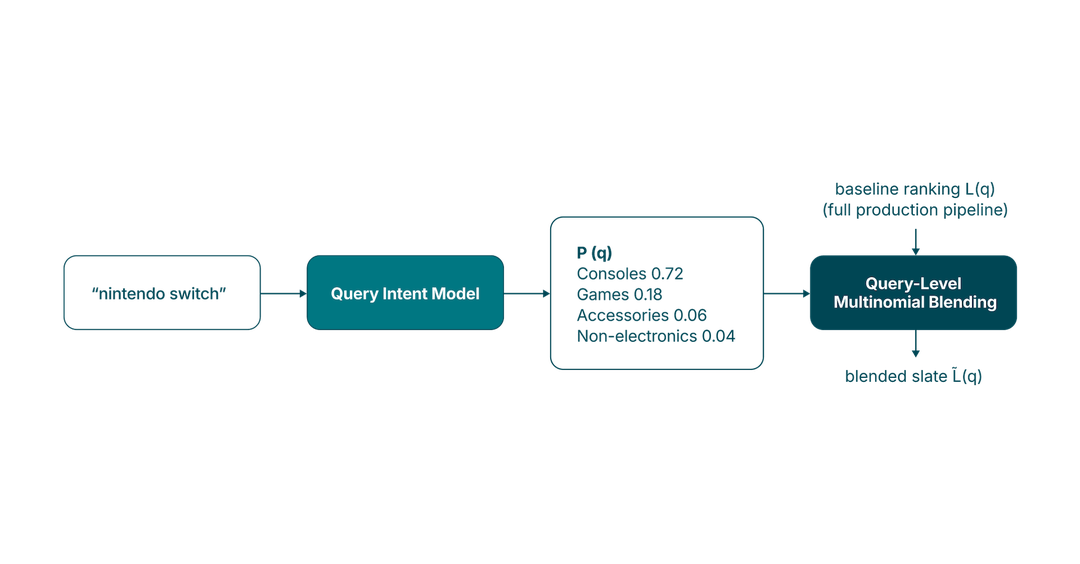
First, they developed a Query Intent Model which predicts what someone is looking for based on their search.
Trained on more than a billion previous search interactions, the model uses a BERT tokenizer, GRU, linear layer and softmax layer to calculate the probability of a query belonging to different categories.
For example, a search for "Nintendo Switch" might produce:
- 72% consoles
- 18% games
- 6% accessories
- 4% other items
Step 2: Getting the balance right
Next came Multinomial Blending, which rearranged the results based on those probabilities. Think of it like shuffling a deck of cards:
- Sort the cards: Divide the existing search results into piles by category, keeping the original ranking within each pile.
- Pick a pile: Use the probabilities from the Query Intent Model to decide which category to draw from.
- Build the results: Take the top item from the selected pile and repeat, filling the search results one position at a time.
So if the model predicts a 72% probability for consoles, roughly 72% of the top positions would be allocated to them.
The clever part: the order of items within each category stays the same, so the best-ranked phone is still the first phone shown. And because this approach sits on top of Vinted's existing search system, the team can launch, adjust or reverse it without changing the underlying retrieval or ranking models.

The gap between what people see and what they want is easy to miss and expensive to ignore.
Did the fix work?
To find out whether their approach had worked, Beatrice and her team ran an A/B test using live traffic across various markets, focusing on searches identified as Electronics-related.
The results were promising:
What it can’t do (yet)
There's still room for improvement. The blending process can only rearrange items that have already been retrieved. So if the right item isn't in the original search results, the model can't magically make it appear.
The challenge of ambiguous searches still exists, too. Someone searching for "Nintendo Switch" could be looking for the console, a game or carry case. But because the model is trained using a single category label for each query, it can sometimes be too confident about what someone wants.
To address this, the team is exploring softer intent distributions and more advanced model architectures, helping preserve variety in search results.
What's next for search at Vinted
The difference between what members see and what they're actually looking for isn't always obvious. But as Beatrice and her team discovered, even small gaps can make a massive difference to the search experience.
By identifying the problem and developing a solution that works alongside Vinted's existing search system, the team has found a way to make relevant items more visible without disrupting the technology already in place. You can dig into the details with the team’s full research paper.
Interested in working on challenges just like this? Explore our open roles.